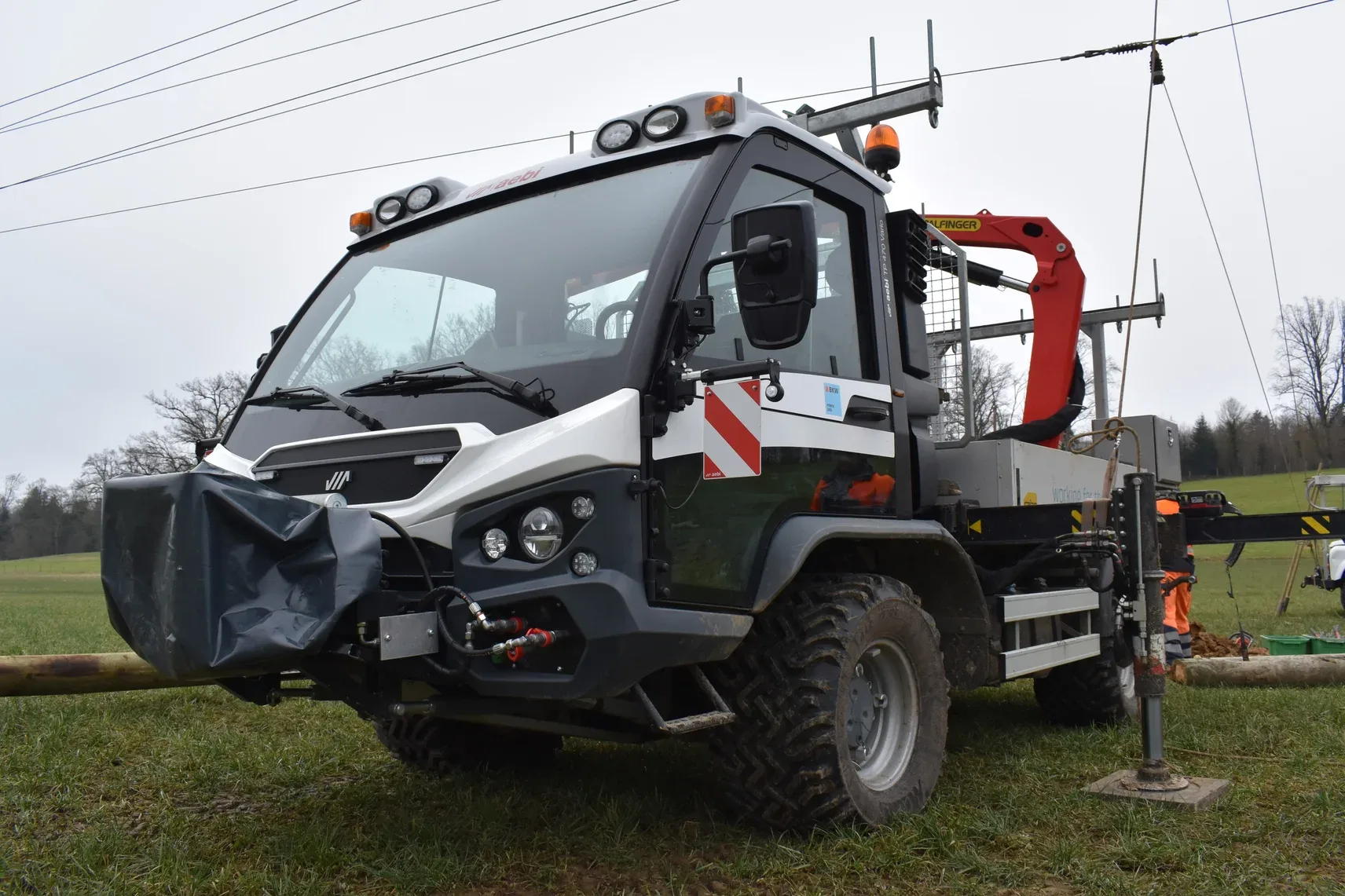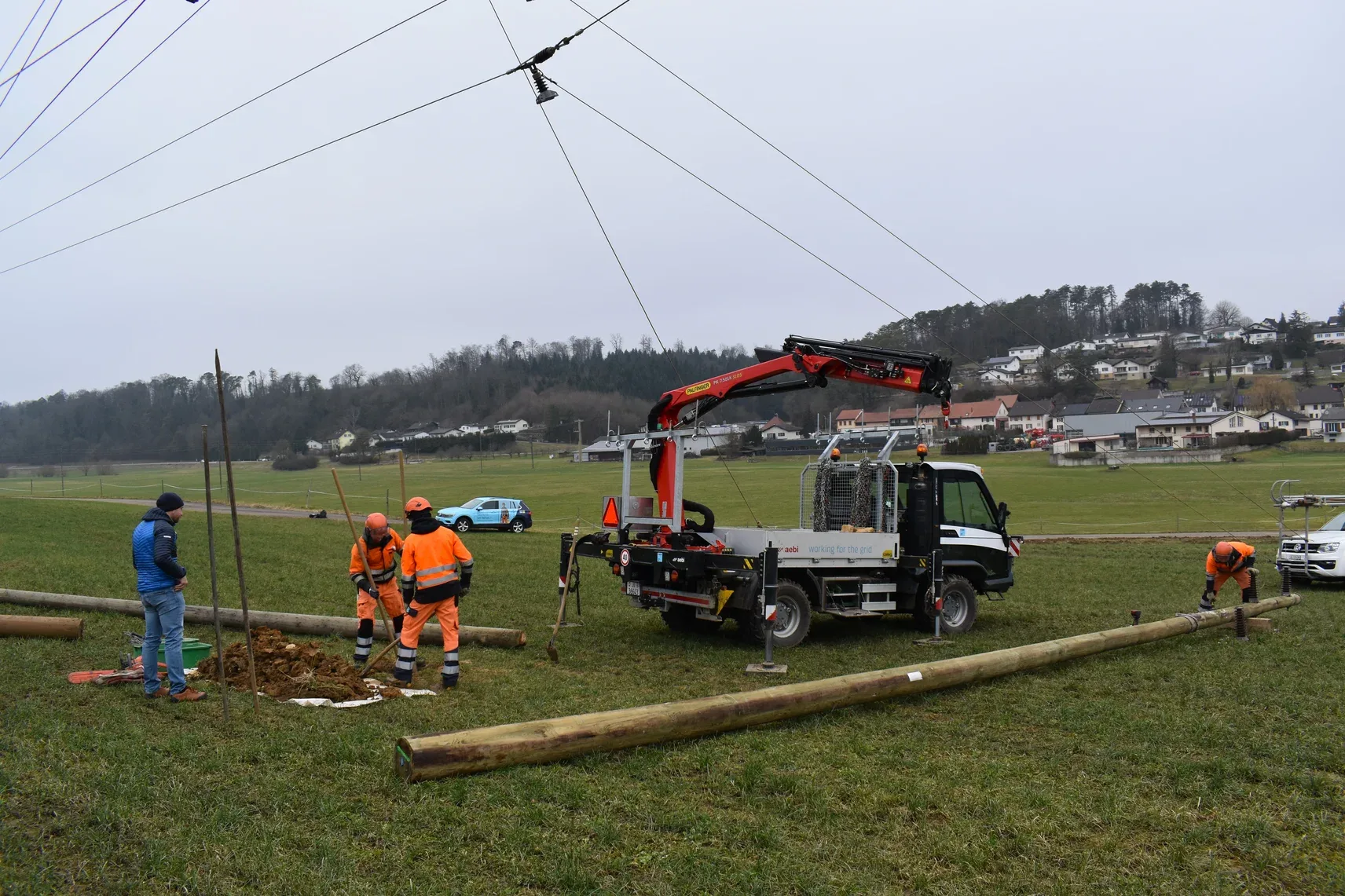
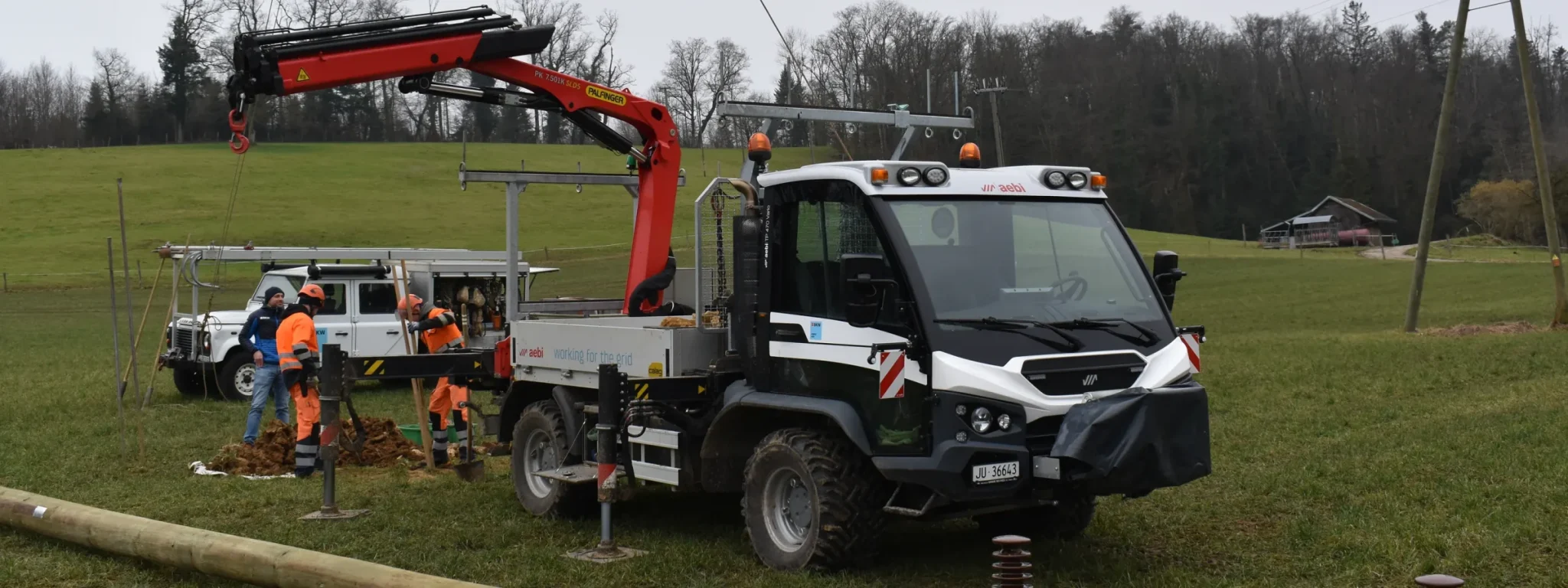
Power lines cross fields, pastures and slopes that are difficult to reach with conventional vehicles. Aebi documents a VT 470 Vario configured for BKW, combining off-road access, load transport and a crane for work on electrical infrastructure.
Work on site
The documented configuration uses a Palfinger crane to support replacement of wooden poles and transformers. The vehicle was developed with specialist partners for the customer. A separate case at the Löntsch hydroelectric plant describes a VT 450 Vario with crane and reinforced tipper for transport and assembly. That historical vehicle retains its identity; neither case implies that every transporter includes a crane or the same body.
The BKW project brings together the carrier, crane and body as a complete working vehicle. Its selection considered payload, total weight and engine performance together, because the crew needs to reach the site with the equipment required for the intervention. Aebi and the specialist partner Calag developed the arrangement around those needs. This approach is relevant when defining a transporter for pole replacement: access and the equipment needed at the destination are considered within the same project.
Choosing the configuration
Choose the working attachment and carrier configuration according to the surface, access and task. The documented application is a starting point for specifying the vehicle; site conditions and the equipment actually fitted determine the operating arrangement. Discuss the requirements before selecting a configuration.
Telemet support
Telemet’s team works with Aebi Schmidt to recommend the right machine and configuration for each site and to support it in service, with spare parts, technical service and training. Ask a specialist about availability for your project.