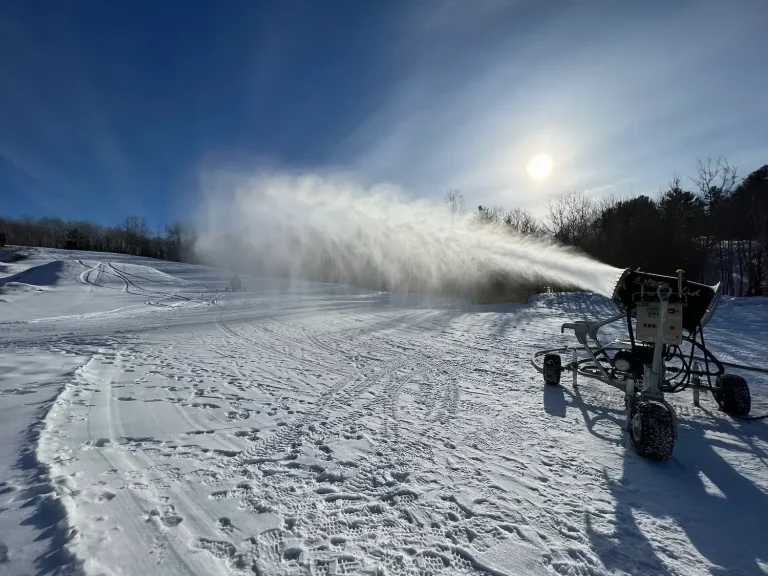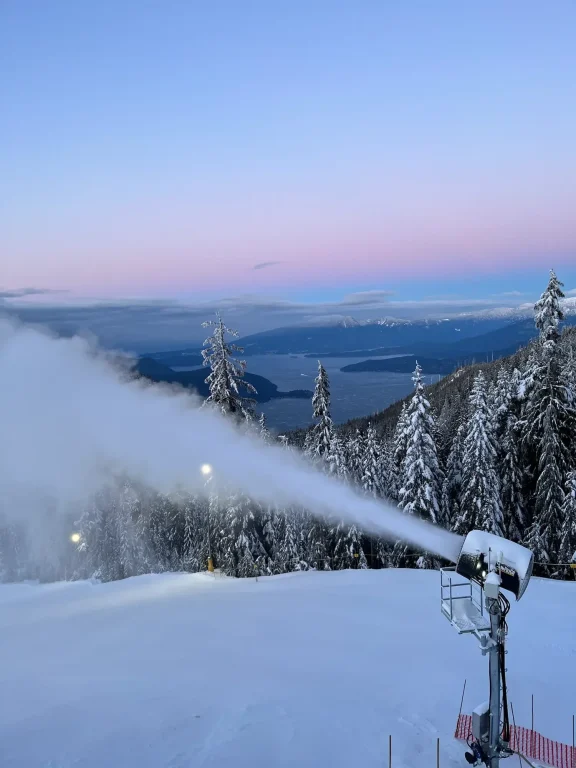
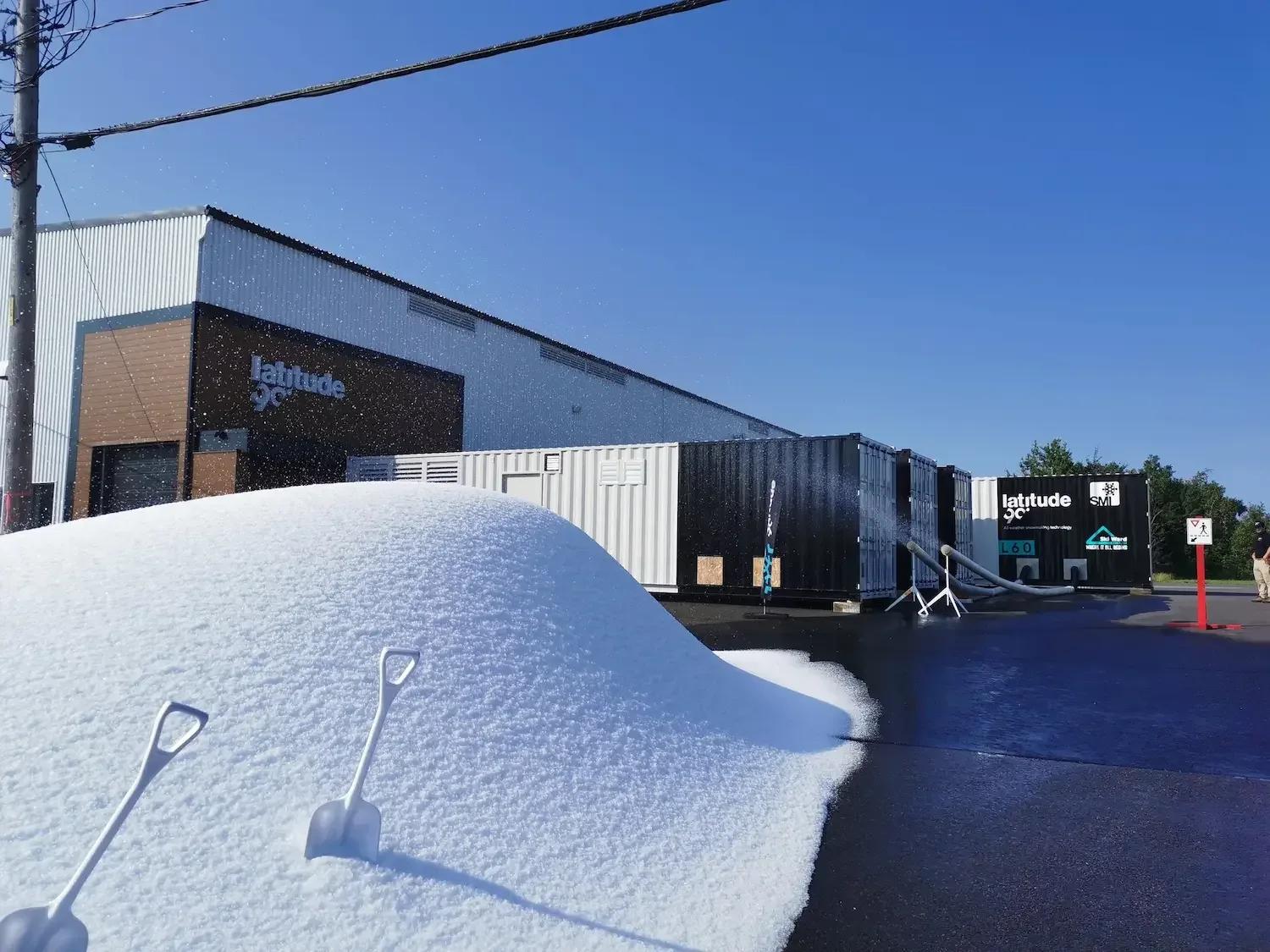
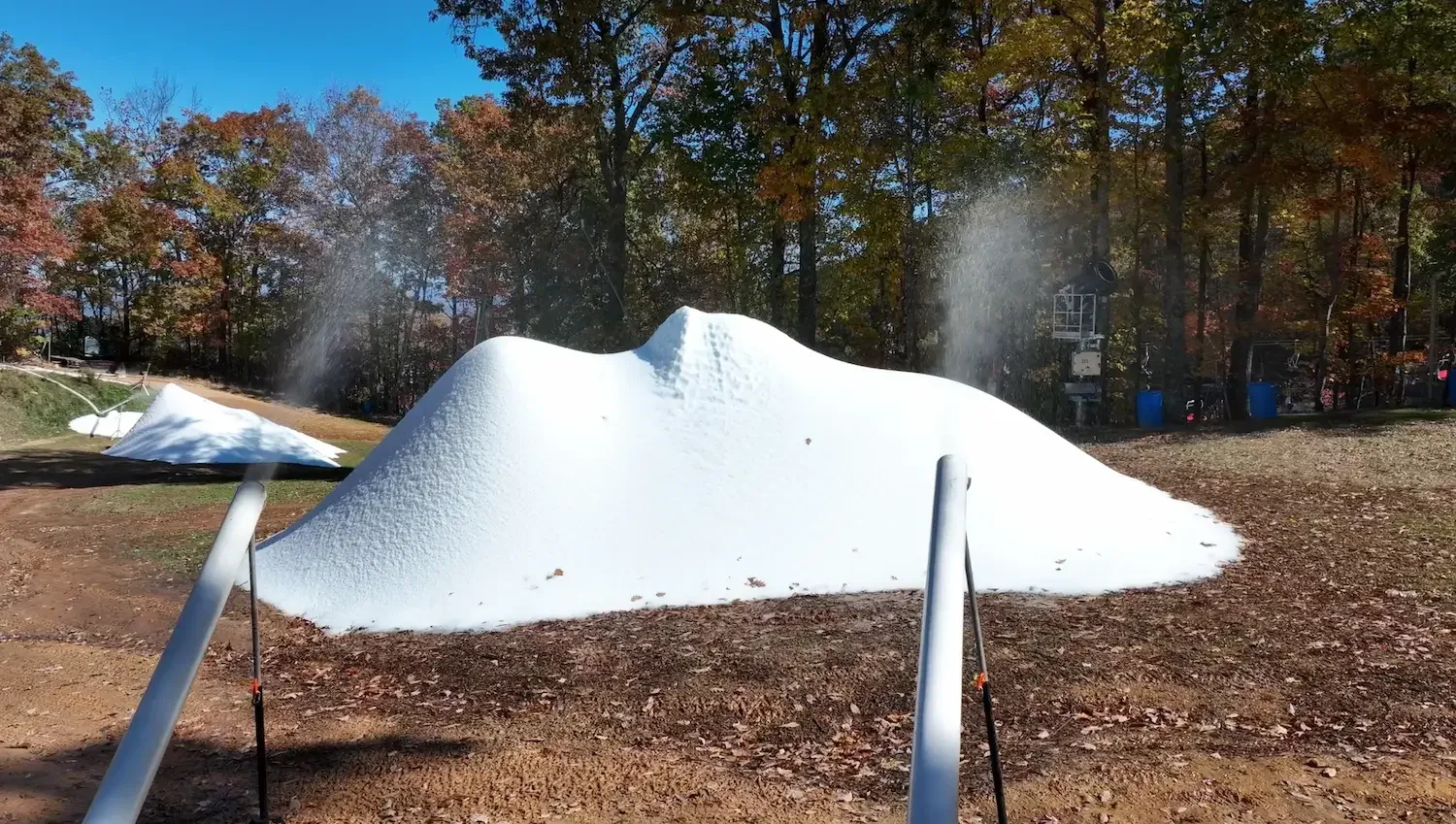
The Latitude90 all-weather snowmaking system, offered by SMI, produces snow at outside temperatures from −20 °C to +25 °C (−4 °F to +77 °F), when conventional snowmaking equipment cannot operate. Each unit is housed in a high-cube container: flake-ice evaporators with their own refrigeration system make the snow, and a propulsion system blows it through a hose up to 100 m (328 ft). Ski resorts use it to open earlier, extend the season and make snow on demand in targeted areas. According to SMI, more than 40 Latitude90 units are in use across North America.
Applications
Latitude90 is aimed at areas that need snow regardless of the weather:
- Tubing lanes and beginner slopes that need a consistent refresh.
- Lift loading and unloading areas and other spots that require targeted snowmaking.
- Base areas, cross-country runs and key terrain; with the larger models, whole runs and large trails.
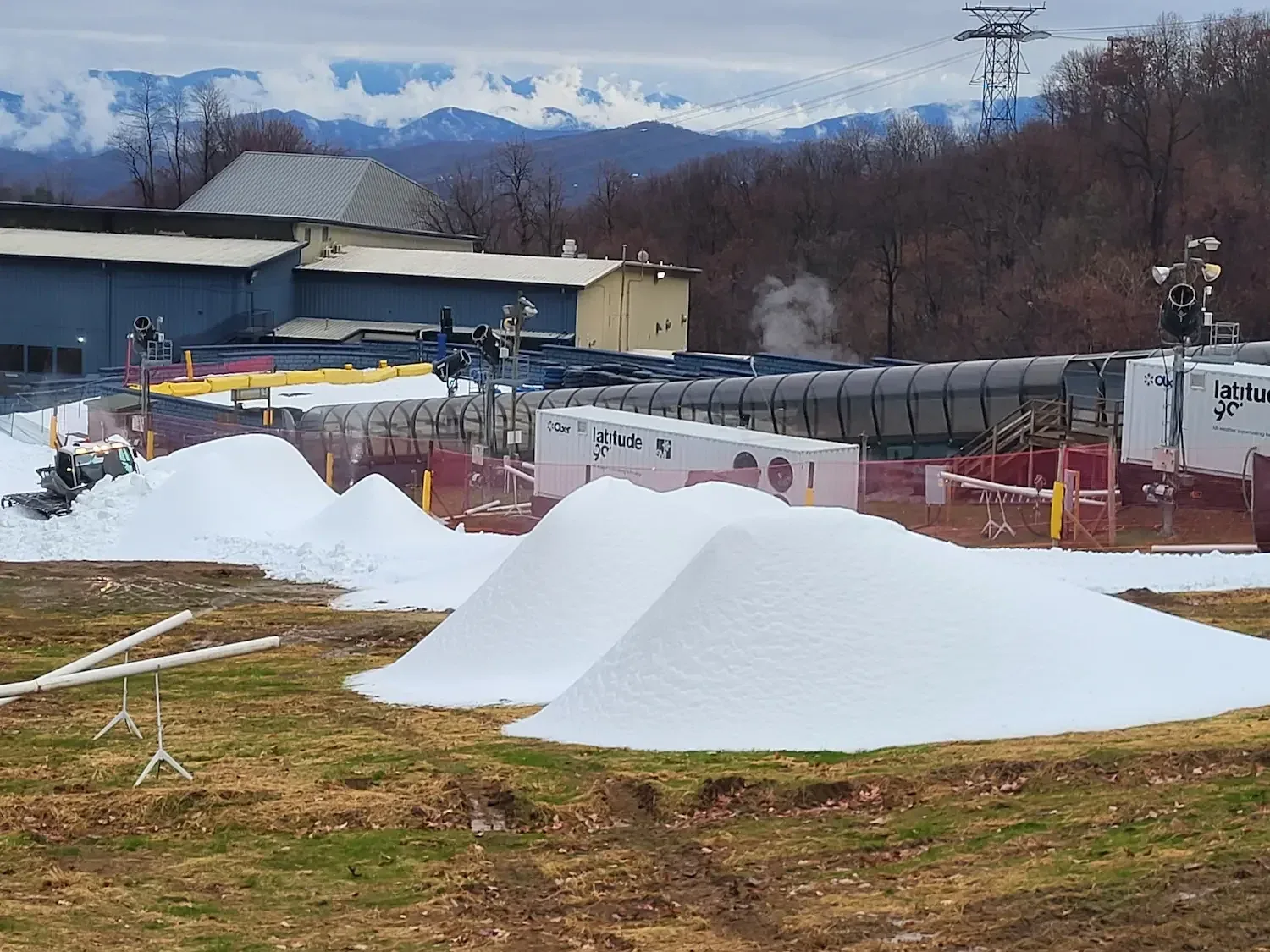
The snow blends with natural and machine-made snow. At Ober Mountain in Gatlinburg, Tennessee, 11 Latitude90 L60 units supported a 127-day season in 2024–2025, the longest in the resort’s history, according to SMI.
Key features
- Snow in mild temperatures. Production from −20 °C to +25 °C lets the resort make snow when it is needed instead of waiting for cold weather.
- Continuous production. According to the manufacturer, the units can run 24/7 for months without freezing up.
- Adjustable flake size. The patented rotor technology changes the size of the snowflakes to reduce melting or improve snow quality.
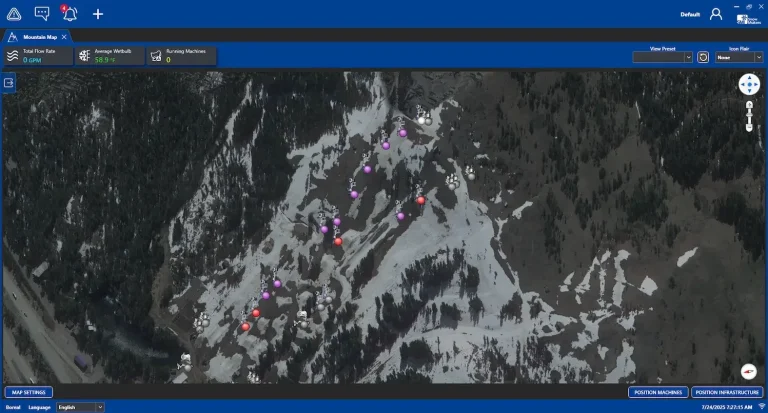
- Remote control. The units are fully automatic and are controlled from a smartphone, computer or tablet, in the Latitude90 app or in SMI’s SmartSnow7 software, with alarm notifications and a camera that shows the process and where the snow lands.
- Water only. Snow is made with water alone, without chemical additives.
- Refrigerant. The units use R448-A, which the manufacturer describes as a new-generation, ozone-free and non-toxic refrigerant.
- Modular and easy to install. Each module can run on its own or together with the others, and the container format means easy transport, quick setup and minimal infrastructure.
Technical data
| Model | L30 | L60 | L120 |
|---|---|---|---|
| Snow production per 24 h (water at 5 °C, outside air at 15 °C) | 60–66 m³ (78–86 yd³) | 120–132 m³ (156–172 yd³) | 240–264 m³ (312–344 yd³) |
| Flake-ice evaporators (30 t each) | 1 | 2 | 4 |
| Snow outlets | 1 | 2 | 4 |
| Throw distance per outlet | Up to 100 m (328 ft) | Up to 100 m (328 ft) | Up to 100 m (328 ft) |
| Water consumption (at 3 bar) | 21 l/min (5.5 US gal/min) | 42 l/min (11 US gal/min) | 84 l/min (22 US gal/min) |
| Running power (throw of 100 m) | 67 kW (105 A) | 139 kW (210 A) | 278 kW (420 A) |
| Power supply | 480 V, 3-phase, 60 Hz (other options available) | 480 V, 3-phase, 60 Hz (other options available) | 480 V, 3-phase, 60 Hz (other options available) |
| Refrigerant | 60 kg of R448-A | 120 kg of R448-A | 240 kg of R448-A |
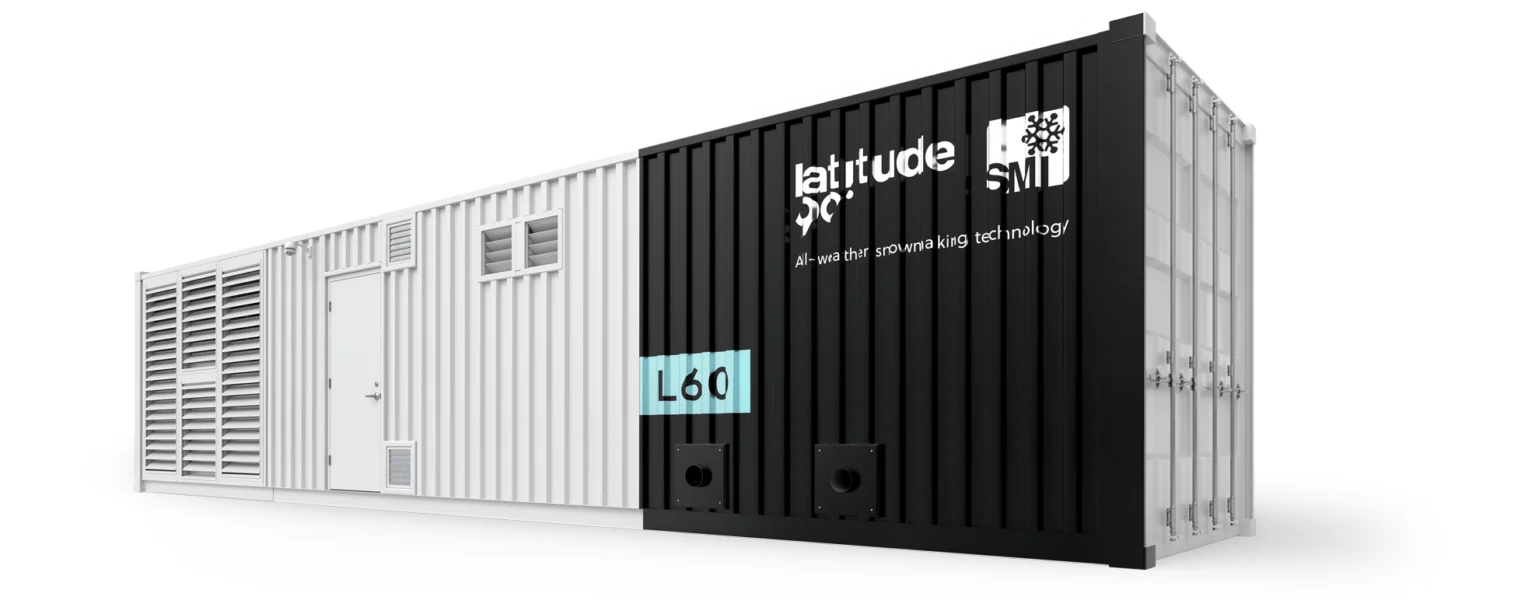
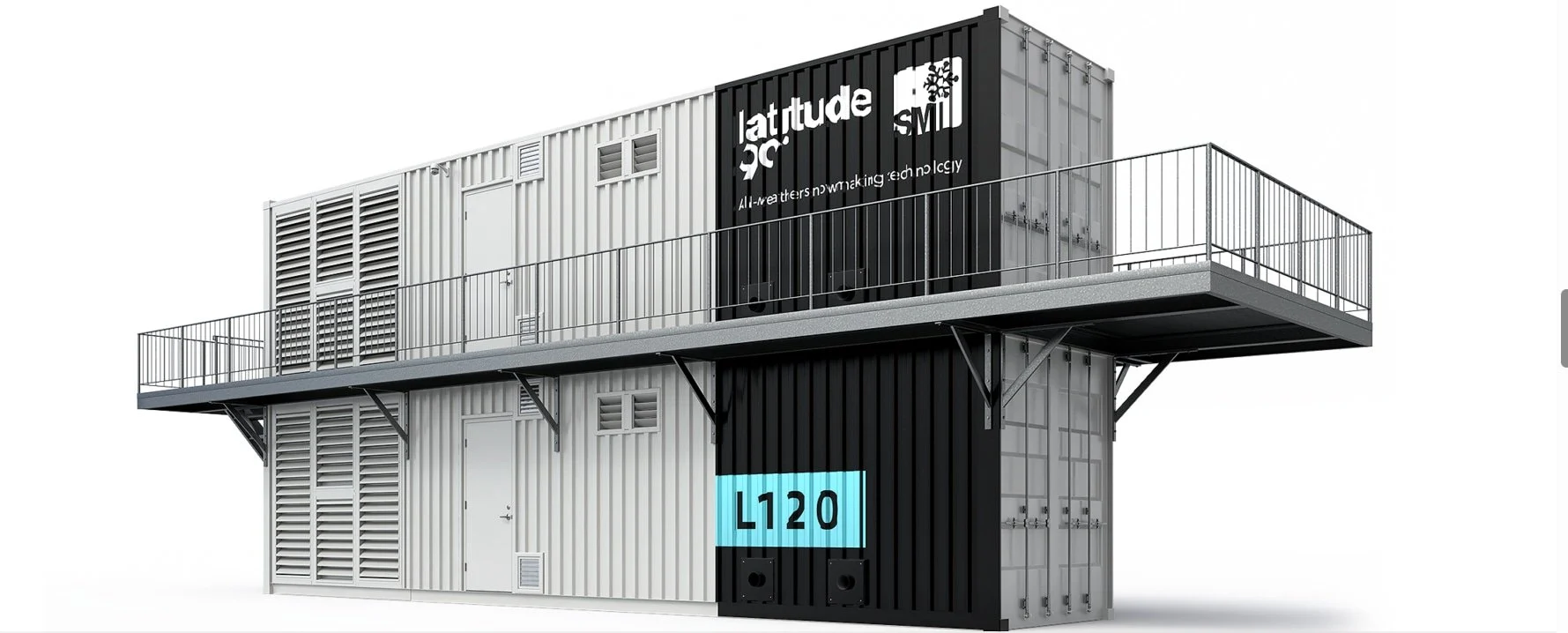
| Container | One 20 ft high-cube | One 40 ft high-cube | Two 40 ft high-cube |
Versions and accessories
- L30: one module and one hose for one snow pile, for lift loading areas, tubing areas and targeted snowmaking.
- L60: two modules and two discharge hoses that create two separate piles; one or both modules can run. According to SMI, its cost per gallon per minute is lower than that of the L30.
- L120: two L60 units with four independent modules and four discharge hoses for multi-zone coverage of large areas.
Energy consumption is lower when the throw is limited to 50 m.
Telemet support
Telemet’s team works with SMI to advise on the right configuration for each operation and to support the Latitude90 system in service, with spare parts, technical service and training. Ask a specialist about availability for your project.