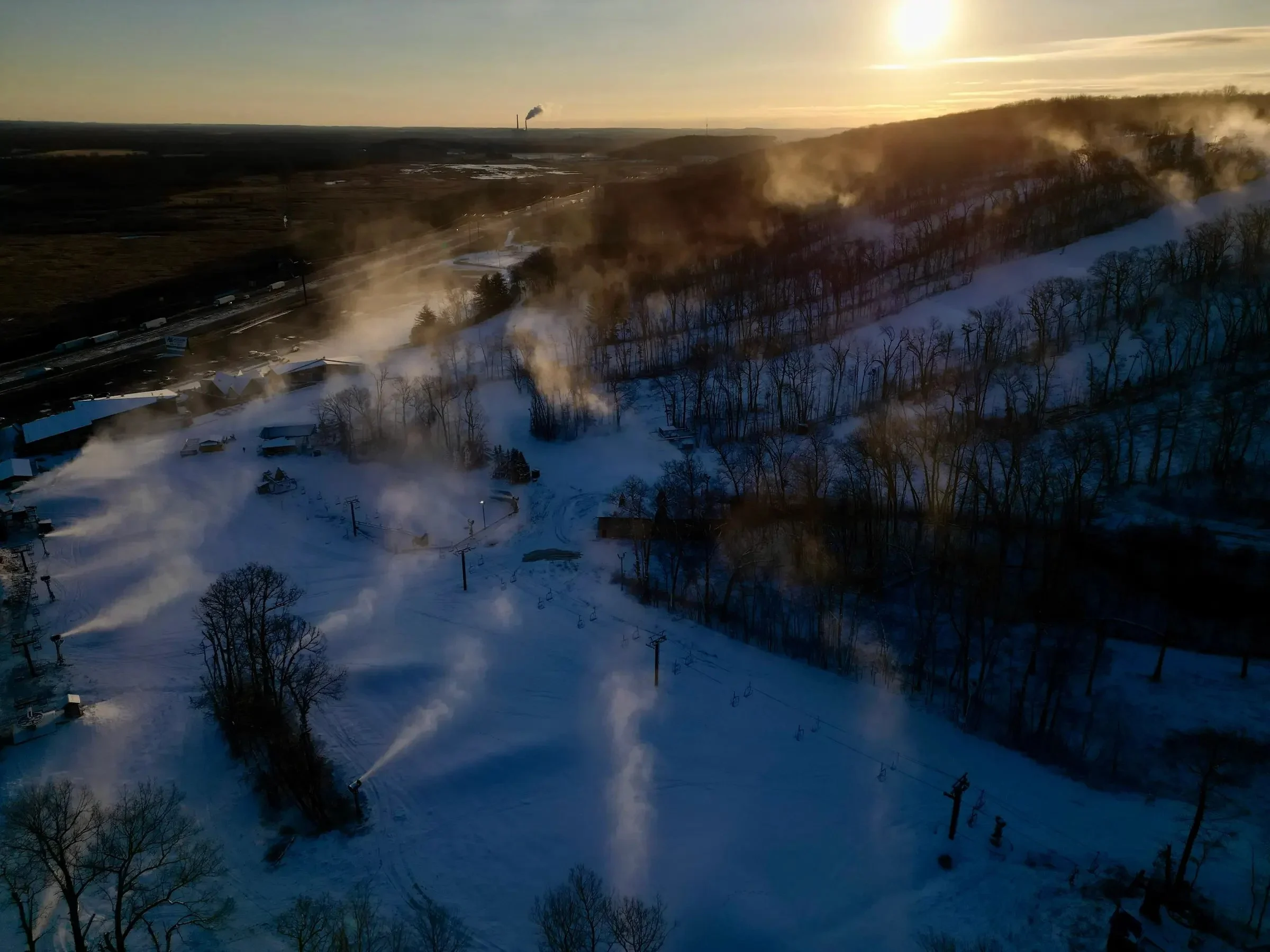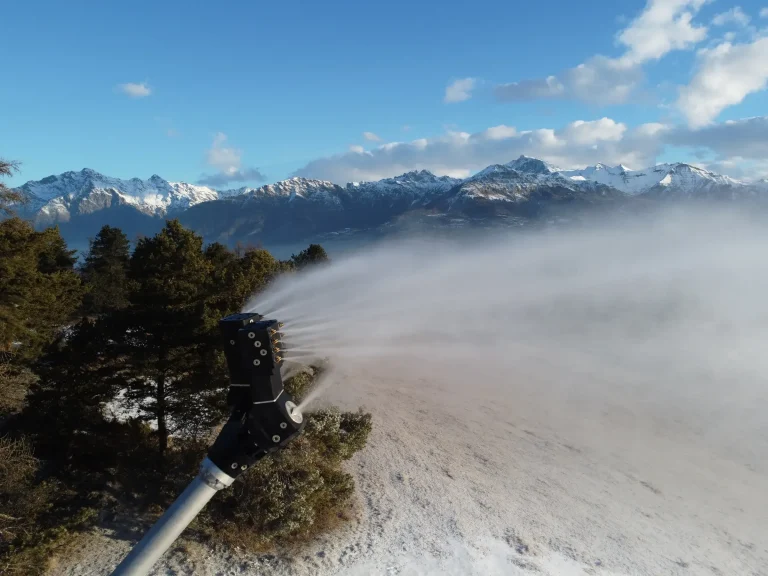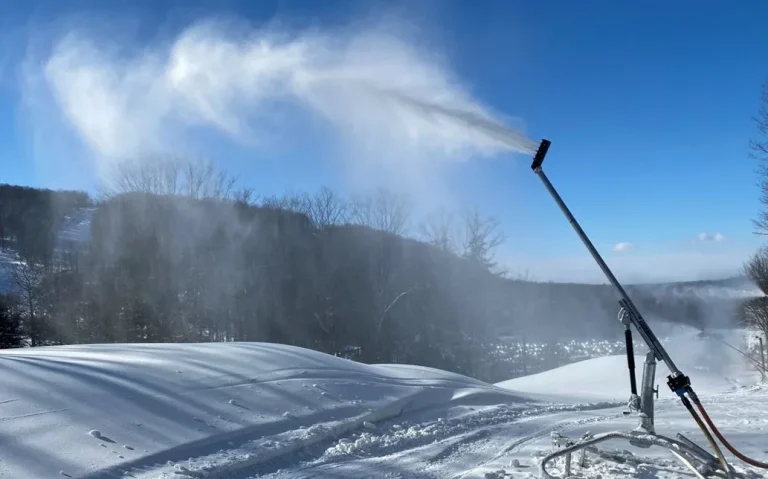
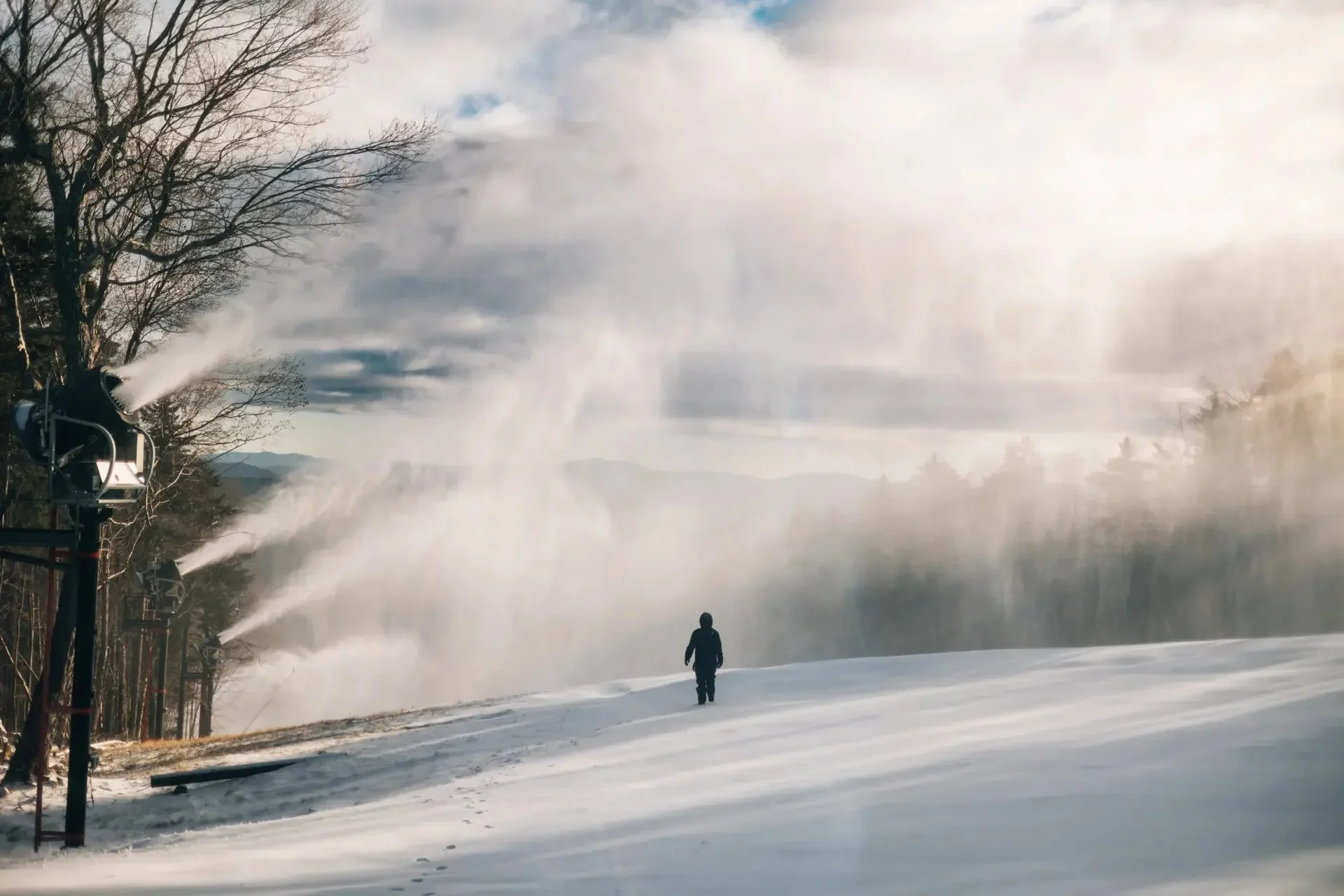
Snowmaking lets a ski resort build and keep a snow base when natural snowfall is not enough. Snow is made by breaking water into small droplets, cooling them in cold air and freezing them into ice crystals through nucleation. SMI designs snowmakers and control systems for this process, and the conditions, the equipment and the way it is set up decide how much snow is made and how good it is.
How snow is made
A snowmaking system atomizes water into fine particles, cools the droplets while they travel through the air, removes the heat needed to freeze them and uses nucleation to trigger ice formation. Without nucleation, supercooled droplets can stay liquid below freezing. Turning water into ice takes much more energy than simply cooling it, because of the heat of fusion, which is why snowmaking is energy-intensive.
- Temperature and humidity. Snowmaking typically requires temperatures below 0 °C (32 °F), but performance depends on the wet bulb temperature, which combines air temperature and humidity. The lower the wet bulb temperature, the faster and more efficiently snow forms.
- Water. According to SMI, covering even a small slope can take tens of thousands of gallons, and systems typically need a water pressure of at least 7 bar (100 psi) for good atomization and steady flow. More water does not always mean more snow: too much water reduces freezing efficiency.
- Air and water flow. More air improves nucleation but raises energy use, and water flow has to match the conditions.
- Snow quality. Higher water content gives wetter, denser snow; lower water content gives lighter, drier snow. After production, the snow is often left in piles for several hours to cure, or freeze completely, before grooming.
Fan snowmakers and snowmaking sticks
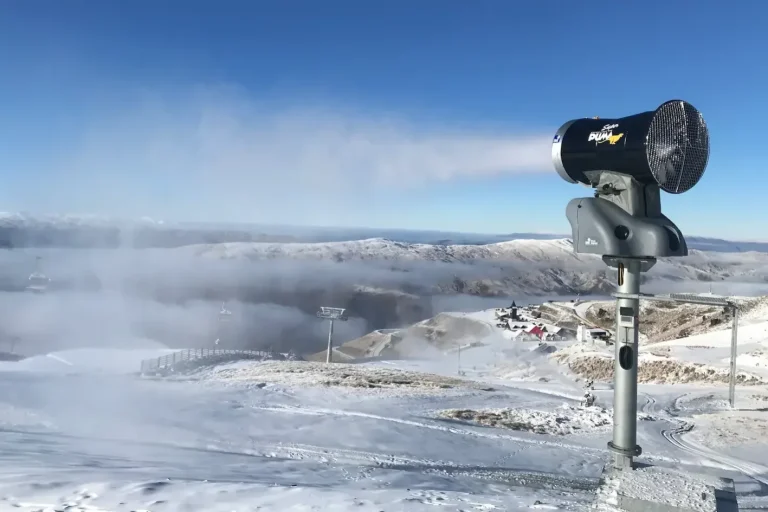
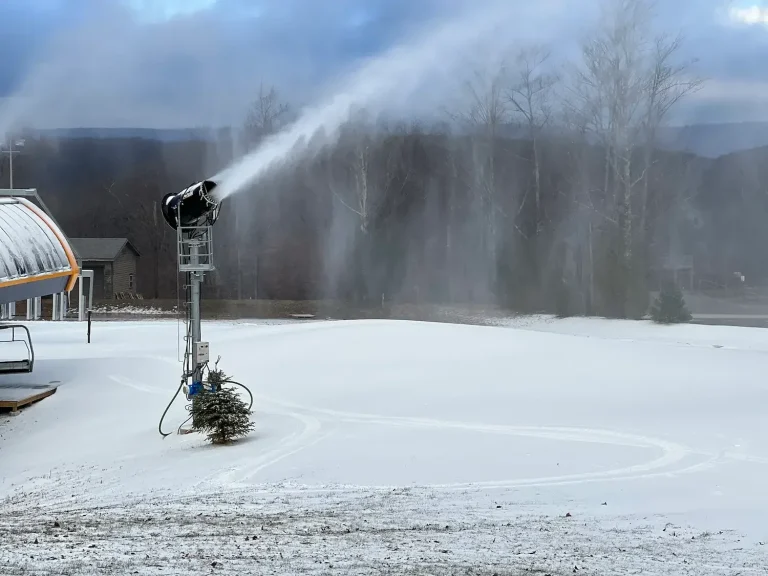
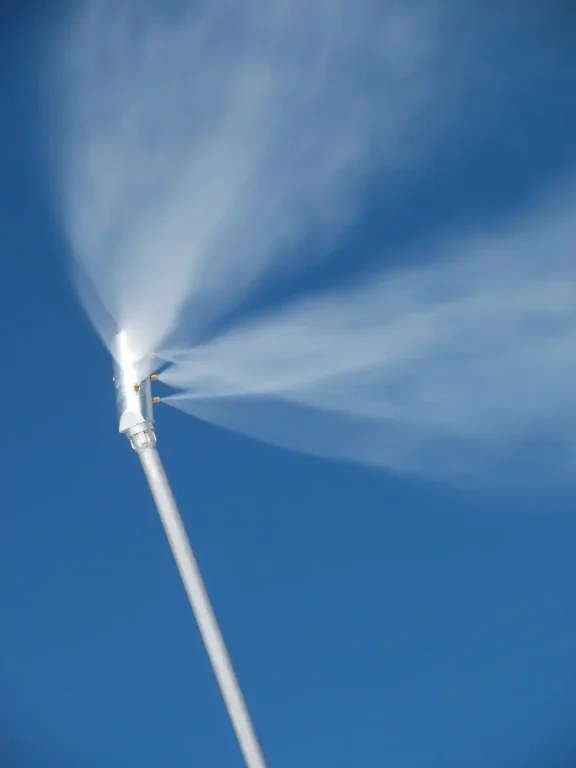
Fan snowmakers use a fan to project snow over long distances, with high output and wide coverage, and perform well in marginal conditions. Air-water snowmakers, or sticks, use compressed air and water, are typically mounted on towers and are more efficient in colder climates and on narrower trails. The right choice depends on the climate, the terrain (trail width compared with throw, slope, elevation and wind exposure), the infrastructure and the operating strategy.
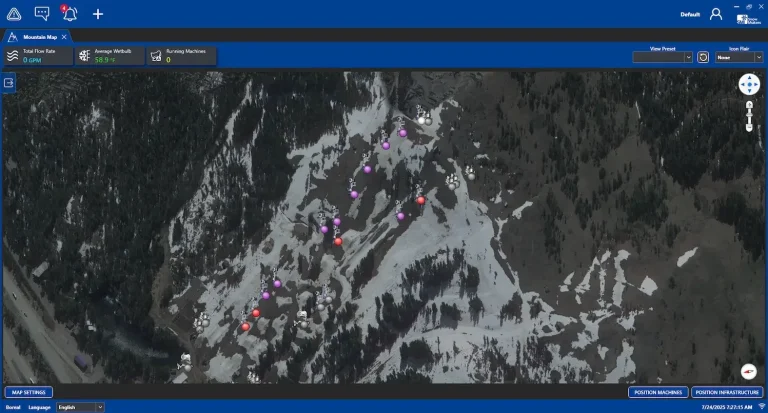
SMI’s SmartSnow control system automates snowmaking by adjusting water flow, air pressure and nucleation to the weather. Operators can control and monitor all the snowmaking equipment on the mountain remotely, including water, air and electrical lines, pumping and air plants, and build a database specific to their resort.
Telemet support
Telemet’s team works with SMI to recommend the right machine and configuration for each site and to support it in service, with spare parts, technical service and training. Ask a specialist about availability for your project.